
Homeowners exploring polyaspartic flooring often ask a practical question: if polyurea and polyaspartic products are so durable, why do professional installers still use epoxy? In the Inland Northwest, where garages face moisture, temperature swings, and year-round vehicle use, the answer lies in how each material performs within a complete garage floor coating system.
Polyaspartic Flooring Is Not a Direct-to-Concrete Solution
One common misunderstanding is that polyurea or polyaspartic coatings can be applied straight to bare concrete. While polyurea-polyaspartic coatings perform extremely well at the surface (i.e., as top coats), they are simply not recommended for direct-to-concrete application.
Concrete in the Inland NW frequently retains moisture, even during dry seasons. As such, they require proper moisture mitigation. Without it, polyurea-polyaspartic-only surface coatings (like “1-day” coating systems) can lose adhesion over time; these coatings are lousy at mitigating moisture. Quality flooring focuses first on “stabilizing” the concrete slab with a moisture vapor barrier before any decorative or protective layers are added.
Why Epoxy Floor Coating Comes First in Polyaspartic Flooring Systems
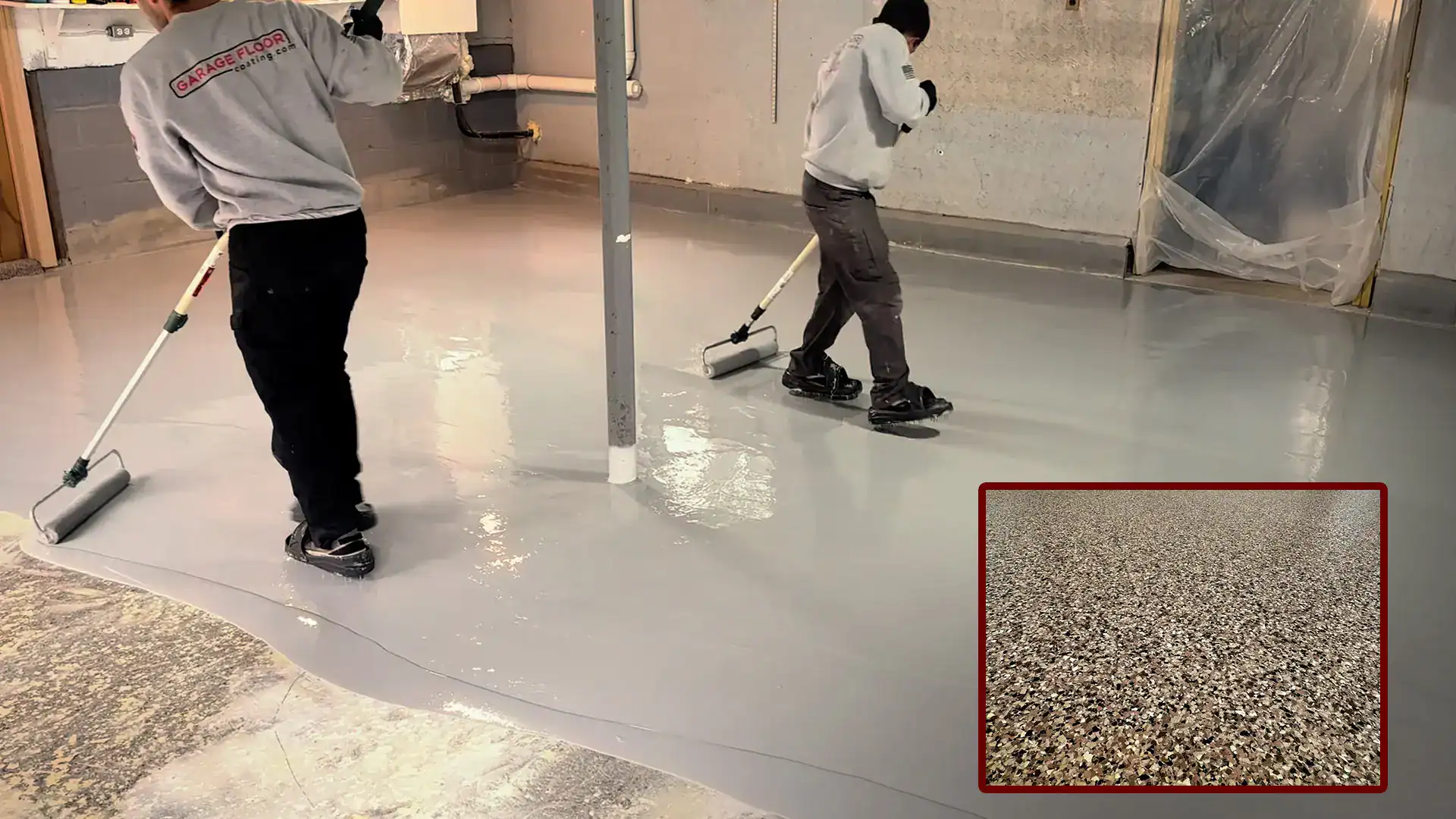
An epoxy floor coating plays a critical role beneath a polyaspartic coating. A moisture-mitigating epoxy can be applied thickly and bonds deeply to concrete, making it an ideal direct-to-concrete base coat. This thick layer helps manage future moisture and creates the structural bond that supports the layers above it.
Albeit, epoxy has its own drawbacks. Epoxy coatings tend to chalk and fade over time when exposed to UV light. (They are commonly used as top coats in interior spaces, where UV exposure is limited, but not in garages or exterior applications). Conversely, polyaspartics provide extreme UV resistance along with excellent stain, chemical and impact resistance…making them the preferred topcoat. As you may be seeing, using the best properties of each coating type creates the most durable coating system.
How Polyaspartic Flooring Protects the Finished Surface
Once the moisture-mitigating epoxy base layer is properly installed, only then are the polyaspartic top coats applied. As stated, they offer excellent resistance to UV exposure, chemicals, oils, abrasions, and hot tire transfer. These quality, hybrid epoxy-polyaspartic systems ensure garage floor coatings mitigate for moisture AND maintain their appearance and integrity in demanding conditions.
Why Professionals Never Rely on a Single Coating
No single coating product excels at bonding to concrete, managing moisture, and resisting surface wear all at once. That’s why hybrid systems work best. The moisture-mitigating epoxy handles concrete adhesion and moisture mitigation, while the polyaspartic top coats protect the surface from daily use and environmental stress. Using both materials together is what allows professional systems to last.
Customize Your Polyaspartic Flooring Options
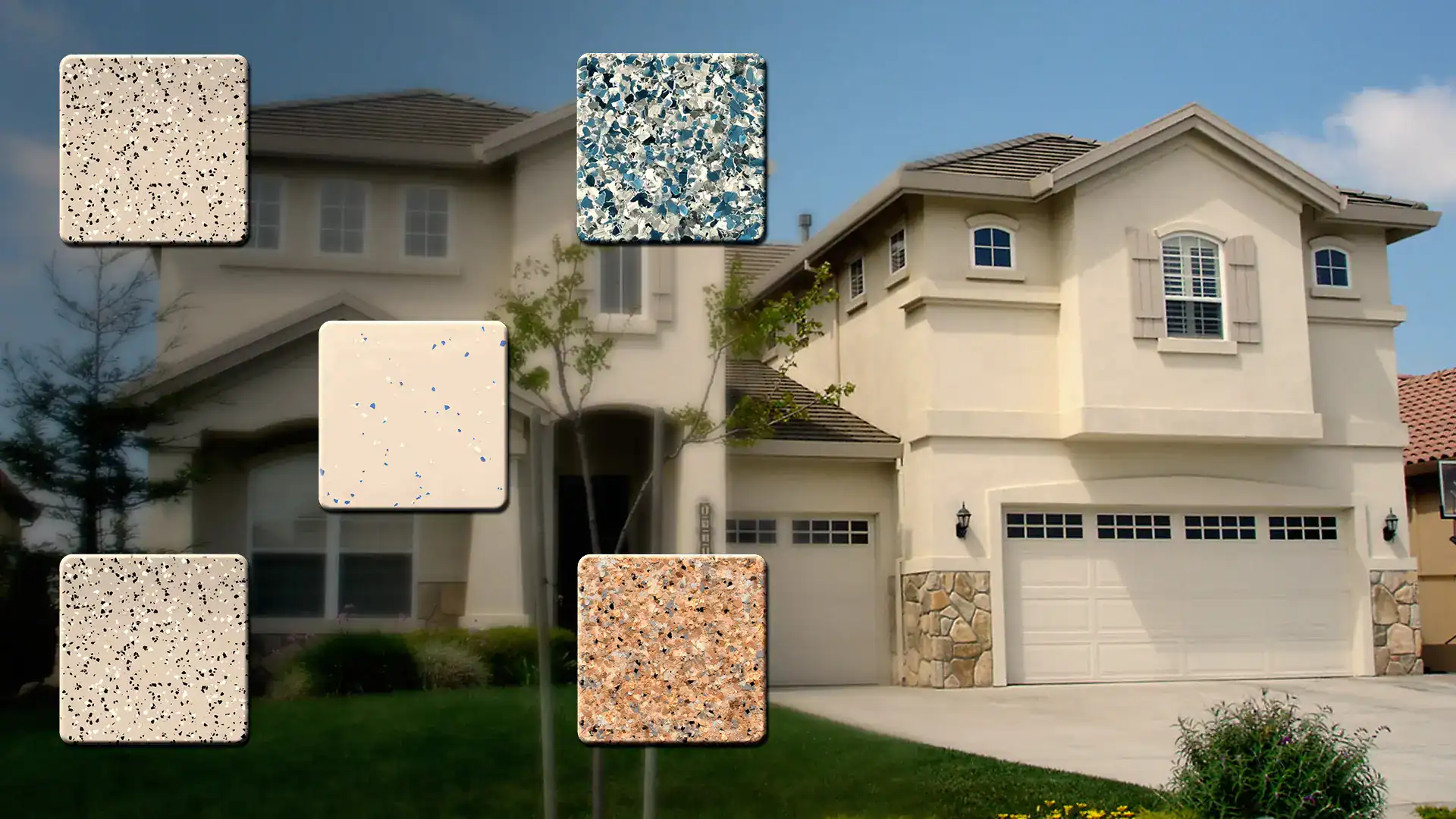
Garage Floor Coating Inland NW offers a Live Coatings Visualizer, allowing you to preview colors and flake blends in your actual home.
If you are considering polyaspartic flooring in the Spokane area, contact Garage Floor Coating Inland NW to schedule a consultation and design a garage floor coating system built for long-term durability and real-world performance.